
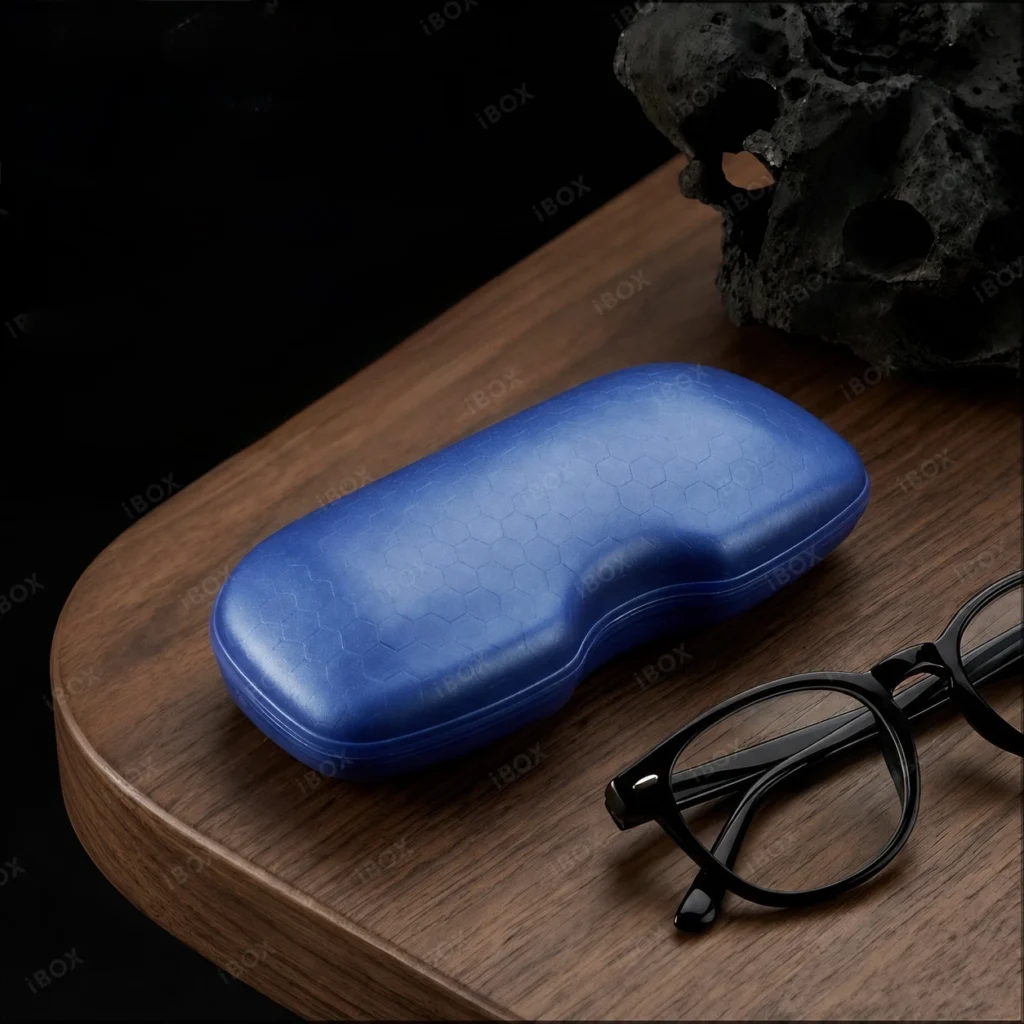
Eyewear Packaging for Optical Stores is more important than simply choosing a case to place around a pair of spectacles. For optical retailers, eyewear chains and distributors, the right spectacle case can influence product presentation, customer experience, protection and even the perceived value of the eyewear being sold.
An optical store may stock hundreds of different frames across different price segments. Using exactly the same packaging for every type of eyewear may not always create the right presentation.
The better approach is to choose spectacle cases according to the frame category, customer segment, protection required and positioning of your optical business.
Here are nine important factors optical retailers should consider when choosing eyewear packaging.
1. Match Eyewear Packaging With the Frame Category
The first step in choosing Eyewear Packaging for Optical Stores is understanding the type of eyewear being sold.
An economical everyday optical frame may require a practical and cost-efficient case.
A premium frame may benefit from a more refined case with stronger construction, better finishing or a more distinctive appearance.
Sunglasses and oversized frames may need larger cases, while compact prescription eyewear may work well with slimmer designs.
Packaging should support the positioning of the eyewear rather than compete with it.
At iBOX, optical businesses can explore different eyewear case constructions, including plastic, metal, zipper and handmade options.
2. Choose the Correct Spectacle Case Size
One of the most practical considerations is size.
A spectacle case that is too small can place unnecessary pressure on the frame. A case that is significantly larger than required may allow too much movement inside and may also increase packaging volume unnecessarily.
Optical retailers should therefore consider the typical dimensions of the frames they sell.
If your store sells multiple eyewear categories, it can make sense to maintain more than one case size.
For example, you may use one size for regular prescription frames and another for larger sunglasses or fashion eyewear.
The goal is simple: the frame should fit comfortably without being squeezed or moving excessively.
3. Consider the Material and Construction
Different case constructions serve different purposes.
Plastic cases are often suitable when lightweight protection, versatility and colour options are important.
Metal cases provide a more substantial feel and can work particularly well for premium collections.
Zipper cases offer lightweight portability and secure closure, making them useful for customers who regularly carry their eyewear.
Handmade cases can provide a more distinctive and premium presentation.
There is no single case construction that is right for every optical store.
The correct Eyewear Packaging for Optical Stores should depend on the product, expected use and price positioning.
4. Think Beyond Price Per Case
Cost matters when buying spectacle cases in quantity, but price should not be the only purchasing criterion.
A lower-cost case that does not fit properly, has inconsistent finishing or fails to complement the eyewear can reduce the quality of the overall presentation.
Optical retailers should evaluate value rather than price alone.
Consider factors such as:
- Construction quality
- Material
- Finish
- Closure
- Interior
- Durability
- Case dimensions
- Presentation
- Branding possibilities
- Consistency across bulk orders
A spectacle case is a relatively small part of the total eyewear transaction, but it is one of the last products the customer receives.
That makes its presentation important.
5. Use Eyewear Packaging to Strengthen Your Brand
A spectacle case does not have to remain generic.
For optical stores that want to build stronger brand recognition, customised eyewear packaging can become a valuable branding tool.
Logo application, colour selection, finish, material and case construction can all contribute to the way your business is presented.
Unlike disposable packaging, a spectacle case may remain with the customer for a long time.
That creates repeated brand exposure after the original eyewear purchase.
This is especially valuable for optical chains, established retailers and private-label eyewear brands.
iBOX works with optical businesses on custom eyewear packaging and case development, including design and material direction, sampling, prototyping, branding requirements and production planning.
6. Consider Different Packaging for Different Customer Segments
One packaging strategy does not have to cover your entire eyewear range.
Optical businesses can divide their packaging according to product segment.
For example:
Everyday eyewear: practical, lightweight and economical cases.
Mid-range collections: enhanced finish and stronger presentation.
Premium eyewear: more substantial or distinctive case constructions.
Sunglasses: cases selected according to larger frame dimensions and portability requirements.
Kids’ eyewear: suitably sized cases designed for younger users.
This approach helps optical stores create clearer differentiation between product categories.
Customers purchasing premium eyewear can receive packaging that supports the positioning of that purchase, while everyday ranges can remain practical and cost-efficient.
7. Check Samples Before Placing a Larger Order
For B2B purchasing, sampling is an important step.
A photograph or catalogue gives you an idea of the design, but a physical sample allows you to evaluate the product properly.
Before confirming a larger quantity, buyers should examine the case dimensions, finish, colour, opening and closing action, material, interior and branding.
It is also useful to test representative frames inside the case.
If you are developing customised Eyewear Packaging for Optical Stores, sampling becomes even more important because branding, materials and specifications should be reviewed before full production.
iBOX follows a development process that includes brief evaluation, design and material direction, sampling and prototyping before production planning.
8. Look for Consistency When Buying in Bulk
A B2B buyer is not purchasing only one good-looking sample.
The real requirement is consistent quality across the full order.
Optical stores and distributors should therefore think about repeatability.
Are the colours consistent?
Is the finish uniform?
Are the dimensions reliable?
Does the branding remain correctly positioned?
Does the closure operate consistently?
These details become much more important when ordering hundreds or thousands of pieces.
A dependable eyewear case supplier should understand that B2B buyers require consistency, not simply an attractive first sample.
9. Choose an Eyewear Packaging Partner, Not Just a Product
For larger optical businesses, the relationship with the supplier can matter almost as much as the case itself.
Your requirements may change over time.
You may introduce new eyewear collections, require additional colours, develop a private-label range or need different packaging for different frame segments.
Working with a supplier that understands eyewear packaging can make these developments easier.
A capable partner should be able to discuss product dimensions, materials, case construction, branding, sampling and production requirements rather than simply presenting a price list.
At iBOX, we develop spectacle cases and eyewear packaging for optical retailers, distributors and eyewear brands across different market segments.
Our current eyewear case range includes plastic, metal, zipper and handmade constructions, along with options for customised and branded development.
Why Eyewear Packaging Matters for Optical Stores
Customers do not experience eyewear as an isolated frame.
They experience the complete purchase.
They see the store.
They interact with the staff.
They select the eyewear.
They receive the finished spectacles.
And finally, they receive the packaging.
This final presentation can reinforce the quality of everything that came before it.
Thoughtfully selected Eyewear Packaging for Optical Stores can help protect the product, create a better handover experience and support the identity of the business.
That does not mean every case has to be expensive.
It means every case should be appropriate for the product it contains.
How iBOX Supports Optical Businesses
iBOX focuses specifically on eyewear cases and related packaging solutions.
For optical businesses, this means access to different constructions, styles, materials and branding possibilities rather than relying on one generic packaging option.
For customised projects, the process begins by understanding the brand, eyewear format, intended market, quantity and packaging expectations. From there, material direction, construction, sampling and branding can be developed around the requirement.
Whether you operate a single optical store, a growing retail chain, a distribution business or an eyewear brand, the objective is the same:
Choose packaging that protects the eyewear while supporting the value of your business.
Choose Better Eyewear Packaging for Your Optical Store
The right spectacle case should combine practicality, protection, presentation and value.
Before placing your next bulk order, consider more than the price.
Look at the eyewear category, frame dimensions, case construction, material, finish, branding potential and consistency you require.
Most importantly, choose Eyewear Packaging for Optical Stores that reflects the experience you want your customers to receive.
At iBOX, we help optical businesses explore eyewear case solutions for different collections, branding requirements and business needs.
If you are planning your next spectacle case requirement, contact the iBOX team to discuss your collection and packaging requirements.
iBOX — Better Quality. Better Value. Better Support.